Группа кабеля Shenghua, профессиональный изготовитель по кабелю. Передать свет, соединить мир!
Water is the most patient enemy of a power cable. It enters through a damaged sheath, travels along the stranded conductor by capillary action, and reaches a joint hundreds of metres away from the original breach, where it causes a failure that appears inexplicable. Water blocking is the set of measures that stop this migration: swellable tapes and powders, filled conductors, blocked joints and watertight terminations. This guide explains how water travels in a cable, which constructions actually block it, where standards require watertight performance, and how to specify and test it. Six answers follow on longitudinal versus radial ingress, filled conductors, joints and verification.

Water enters a cable in three ways. It can pass radially through the sheath if the sheath is damaged, porous or chemically degraded. It can enter at a termination or joint where the sealing is incomplete. And it can enter at a cut end during storage or installation if the end is left unprotected.
Once inside, water travels longitudinally through the gaps between conductor strands and through the spaces between cores. The driving forces are capillary action, temperature cycling that pumps air and water along the cable, and pressure differences along the route. A cable installed in a duct that fills with water during a wet season can carry that water a long way, and the resulting corrosion and treeing damage appear far from the entry point.
The consequences are gradual and expensive. Copper oxidises, increasing resistance. Insulation absorbs moisture, reducing insulation resistance. At the failure point, the damage usually appears as a breakdown at a joint or at a low point in the route, where water has collected. Repair requires excavation, jointing and often replacement of a longer section than the original damage would suggest.
This is why water blocking is treated as a design property rather than an accessory. It is built into the cable during manufacture, and it cannot be added later.
Swellable tape is the most common measure. A tape containing a superabsorbent polymer is wrapped around the conductor or over the cores; when water reaches it, the polymer swells and forms a gel that blocks further movement. The tape is cheap, effective and compatible with standard extrusion processes, which is why it appears in most water blocking designs.
Water swellable powder is used in the interstices between strands and cores, where a tape cannot easily be applied. The powder performs the same function, swelling on contact with water to seal the gaps. Powder application requires careful process control, because an uneven distribution leaves unblocked channels.
Filled conductor is a stronger measure. The spaces between strands are filled with a compound during stranding, so there is no longitudinal channel at all. This is the most reliable approach for cables that will be submerged or installed in permanently wet ground, and it is more expensive because it adds a process step and material.
Longitudinally watertight construction combines these methods: filled or blocked conductor, swellable tape over the cores, and a sheath that is bonded or tightly applied. Radially watertight construction adds a metallic barrier, usually a laminated aluminium tape or a welded sheath, which prevents water passing through the sheath at all.
The first reason is that the specification often requires it. Many utility and infrastructure projects state watertight requirements for underground and submerged routes, and a cable without the construction is technically non compliant even if it performs adequately in dry conditions. A supplier who cannot offer it cannot bid.
The second reason is total cost. A water blocked cable costs a few percent more than a standard one. A single failure caused by water migration can cost the price difference many times over in excavation, jointing, downtime and reputational damage. The economics are not close.
The third reason is that water damage is invisible at delivery. A cable that will fail in five years looks identical to one that will last thirty. The only difference is the internal construction, which is why the buyer must specify it rather than rely on inspection.
The fourth reason is that it distinguishes serious suppliers. Water blocking requires process discipline and material control, and factories that invest in it usually invest in other quality measures too. Asking the question is a useful filter.
State the requirement explicitly in the purchase order, using the language of the standard: longitudinally watertight, radially watertight, or both. Add where it applies: the whole length, or only the ends. A cable with blocked ends and an unblocked middle is a partial measure that fails the intent.
Ask how the blocking is achieved. A supplier who answers with the tape type, the powder application and the conductor filling method is a supplier who understands the construction. One who answers watertight without detail is answering a marketing question.
Specify end sealing for shipment. Even a water blocked cable should have sealed ends during transport and storage, because the blocking is designed to stop migration, not to accept continuous ingress. A cap or heat shrink seal costs little and prevents an argument at site.
Verify with a water penetration test where the order justifies it. The standard test immerses a length and applies pressure, then checks for water at the far end after a defined period. Third party testing is available and, for large orders, worth arranging.
Finally, specify jointing and termination practice. A water blocked cable joined with a non watertight joint has a weak point that defeats the purpose. Resin joints, heat shrink with appropriate sealing and gel closures are the usual solutions, and the accessory must be rated for the environment. Products such as the 0.6/1KV Underground Armored PVC Insulated Cables -20C To 70C For Underground Power Distribution Solutions and the IP68 PVC Insulated Submersible Cable 4x10mm2 Underwater Pump 0.6/1kV IEC60502 show how watertight constructions appear in a catalogue, and the difference from a standard cable is entirely internal.
Underground distribution in wet ground is the classic case. Where the water table is high, or where the route passes under roads and rivers, a cable that is not water blocked will eventually take water at a damaged point and carry it to a joint. Utilities in northern Europe specify longitudinal watertight construction as standard for this reason, and the requirement has spread to projects in Asia and Africa where the soil is wet for part of the year.
Submerged installations are the second case. Pump stations, treatment works, docks and outfalls put cable under water permanently, and there the requirement is radial as well as longitudinal, because the sheath itself is under pressure. A laminated metallic barrier or a welded corrugated sheath is used in these designs, and the terminations are sealed accordingly.
The third case is the cable that passes through a flood prone area rather than being submerged. Here the requirement is often to protect the ends and the joints rather than the whole route, and a combination of blocked ends, watertight joints and a sealed termination is enough. Specifying a fully watertight cable for a route that only floods occasionally is a cost that may not be justified, and a competent supplier will say so.
The most common mistake is to specify water resistant and expect watertight. Water resistant describes a sheath that resists surface water for a time; watertight describes a construction that prevents migration. The two are not the same, and the price difference reflects it.
The second mistake is to block the conductor but leave the cores unblocked, or to block the cores and leave the interstices open. Water finds the path of least resistance, and a partial measure simply moves the failure. The specification should describe the whole construction, and the supplier should confirm which paths are blocked.
The third mistake is to ignore the ends. A water blocked cable shipped with open ends can take water during storage, and the blocking agent may be saturated before installation. Sealed ends, with a cap or a heat shrink, are a small cost that protects the whole investment.
The fourth mistake is to forget the joints. A watertight cable joined with a standard resin joint may be adequate if the resin is compatible with the cable and applied correctly, but a taped joint in a wet trench is not. The accessory must be specified with the environment in mind.
The ends of a water blocked cable need as much attention as the middle. At a termination, the blocking tape is cut back to make the connection, which opens a path for water unless the termination itself is sealed. Heat shrink terminations with adhesive lined tubing, or cold applied seals with mastic, restore the barrier, and the choice depends on the environment and the cable size.
At a joint, the jointing kit must be compatible with the blocking system. A resin joint that encapsulates the conductors provides a good barrier if the resin adheres to the insulation and the sheath, while a taped joint relies on the tape and the mastic to keep water out. For permanently wet locations, the encapsulated joint is the safer choice, and the extra cost is small relative to the excavation that a failure would require.
The quality of the joint depends on the jointer as much as on the kit. Clean surfaces, correct preparation of the sheath and insulation, and the specified cure time are all part of the process. A joint made in a hurry in a wet trench is the most likely point of failure in any underground installation, and this is worth supervising rather than assuming.
Confirm the requirement type, the location, the jointing method and the end sealing. Those four answers determine whether a standard blocked construction is sufficient or a fully filled, metallic barrier design is needed.
A short written confirmation from the supplier, referencing the standard and the construction, is the document that protects the buyer when the route is inspected or when a failure is investigated.
Longitudinal blocking stops water travelling along the cable; radial blocking stops it passing through the sheath. Submerged routes often need both.
For permanently wet or submerged installations it is the most reliable option. For general underground work, swellable tape and powder are often sufficient.
No. It is built into the conductor and core assembly. It must be specified before production.
By immersing a cable length and applying pressure or a water head, then checking for ingress at the far end after a defined time, to the applicable standard.
Yes. A non watertight joint defeats the cable construction, so the accessory must match the environment.
No. It affects construction and cost, not the rated voltage or current, though diameters may increase slightly.
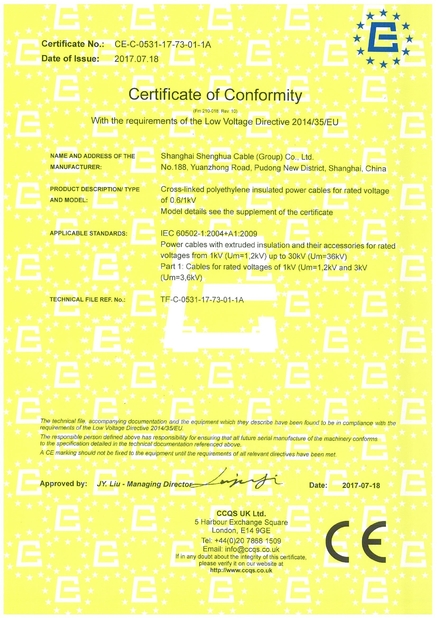
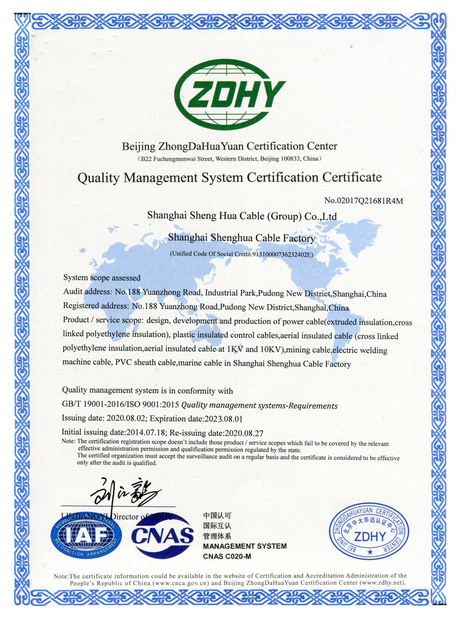
Water blocking is an internal construction that determines whether a cable survives twenty years underground or fails after five. Specify longitudinal or radial performance in the order, ask how it is achieved, seal the ends for shipment and match the joints to the environment. Shanghai Shenghua Cable Group builds water blocked PVC insulated cable with swellable tape, water swellable powder and filled conductor options, and can provide water penetration test data for projects that require it. Send your route conditions through our contact page and our engineers will propose the right construction. Related items include the KVVP 4x1.5mm2 Shielded Flexible Oxygen-Free Copper PVC Insulated Control Cable 450/750V, the Multi Core 300V Sheathed Steel Wire Armored PVC Insulated Cables Coiled For Underground Use, the Medium Voltage XLPE Pvc Insulated Pvc Sheathed 3 Core Flexible Cable Sh Shenghua, the VDE Standard PVC Insulated Cables In Black For Household Electrical Installations, the IP68 Waterproof Submersible Pump Cable H07RN-F 4x6mm2 Rubber Sheathed 450/750V Deep Well Power Cable and the Waterproof Water Blocking 1x630mm2 Aluminium XLPE Insulated Power Cable HDPE Sheathed Wet Location Run.
A written confirmation of the construction and the standard is the document that matters at inspection.